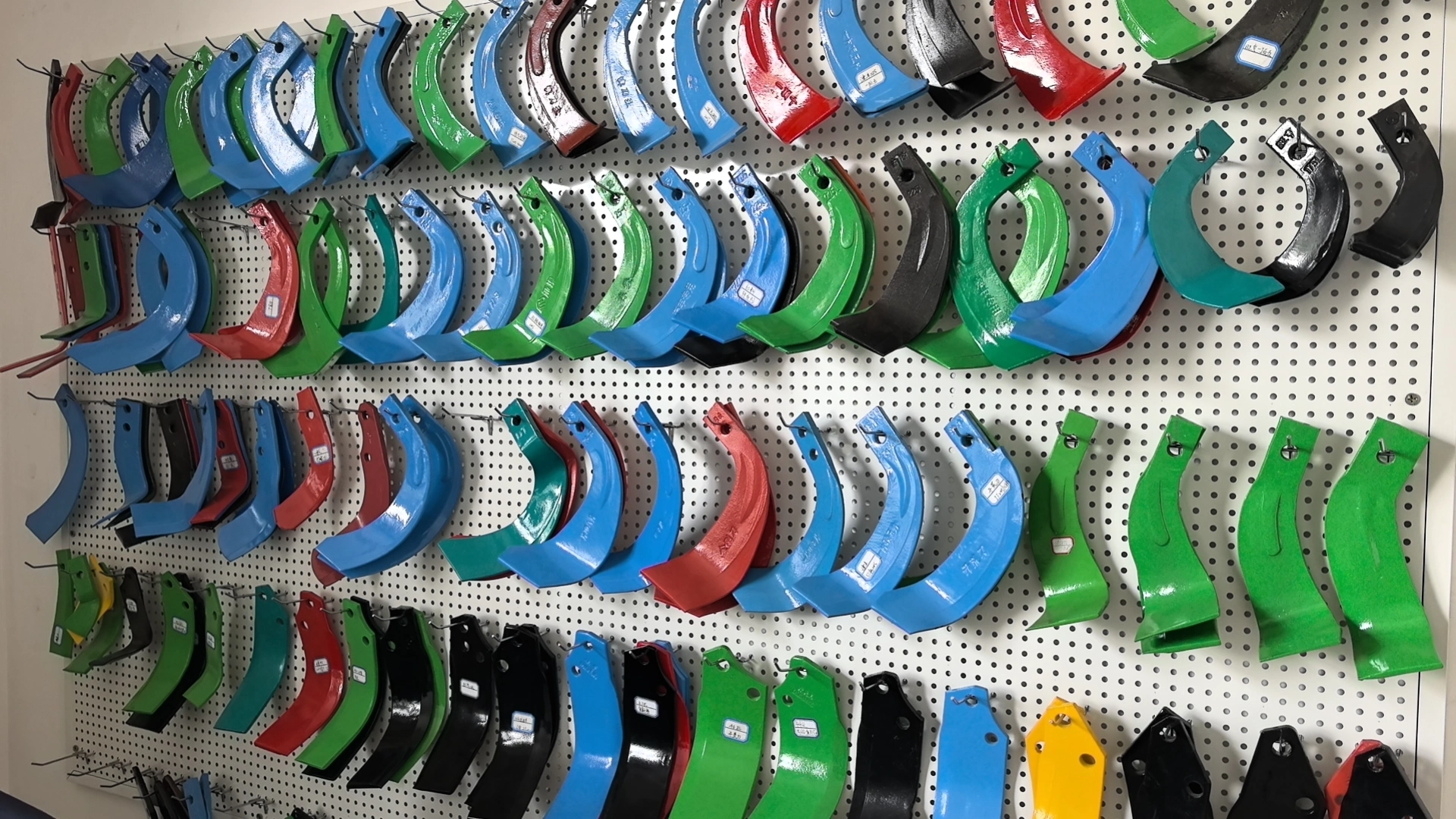
Rotary tiller blades (also called rotary blades) are the core working component of rotary cultivators, directly affecting tillage quality, fuel efficiency, and service life. For small to medium-scale agricultural operations, especially in fragmented plots common across Southeast Asia, choosing the right rotary blade is critical to boosting productivity.
Common Types of Rotary Tiller Blades
Different soil and cropping scenarios require different blade designs:
- Straight Rotary Tiller Blades: The most common standard type, ideal for general-purpose dry-land tillage. It offers low resistance and high tillage efficiency, and fits perfectly for small power tillers popular in smallholder farms.
- Curved (C-type) Rotary Blades: Optimized for deeper tillage and soil turning. The curved shape better crushes clods and mixes soil, working well for pre-planting preparation in heavy or compacted soils.
- Sugarcane Special Rotary Blades: Designed for sugarcane fields, with thicker steel and reinforced welding to resist impact from root stubble and hard soil, reducing breakage and replacement frequency.
- Thickened Paddy Field Blades: Made with wear-resistant alloy steel and anti-rust treatment, the extra thickness stands up to the abrasive effect of muddy water and silt in wet fields, extending service life significantly.
- Wasteland Reclamation Blades (C-type / 7-shaped blades): Extra-heavy duty design for breaking uncultivated grassland and hardpan, with high strength to handle tough, root-filled soil.
How to Select the Right Rotary Tiller Blade
- Match to your soil type: Light loam can use standard thickness blades; sticky or rocky soil needs thicker, reinforced blades. For paddy fields, prioritize anti-rust and wear-resistant properties.
- Match to your tiller power: Small power tillers (<15HP) usually fit 20-24cm blades, while medium and large machines need longer, heavier blades to match working width.
- Prioritize material quality: High-quality rotary blades are forged from 65Mn spring steel, which balances hardness and toughness – not easy to break or deform, even under heavy use. Avoid cheap blades made of low-grade carbon steel, which wear out quickly.
Basic Maintenance Tips
- Check tightness regularly: Vibration during operation can loosen blade bolts – check before each use to avoid losing or throwing blades.
- Flip when worn: Most rotary blades wear evenly on one side first. Once the cutting edge becomes blunt, you can remove the blades and flip them to use the other edge, doubling service life.
- Store properly: After the tilling season, clean mud and rust off the blades, coat with waste oil to prevent corrosion, and store in a dry, ventilated area.
At Hebei Geoscope International Trade, we produce a full range of rotary tiller blades for small to medium power tillers, covering all the types above for different regional needs. We support custom size, thickness, and branding to match your local market requirements. All our blades are made of high-quality forged steel, with strict quality testing to ensure reliable performance in the field.
Contact us today for catalog and pricing – we’re happy to help you source the right tiller blades for your business!